When selecting a double girder overhead crane, many buyers initially focus on key parameters such as lifting capacity, span, and lifting height. While these specifications are essential, one equally critical factor often determines whether the crane will operate reliably and efficiently over time: the duty cycle.
The duty cycle defines how frequently and intensively a crane is expected to operate. It reflects the combination of load magnitude, lifting frequency, operating time, and operational patterns throughout the crane’s service life. Selecting a crane with an appropriate duty cycle ensures that the equipment can withstand the mechanical stresses associated with daily operations without premature wear, excessive maintenance, or safety risks.
This article explains why duty cycle is a fundamental consideration in double girder overhead crane selection, and how it influences design, performance, reliability, and long-term operating costs.
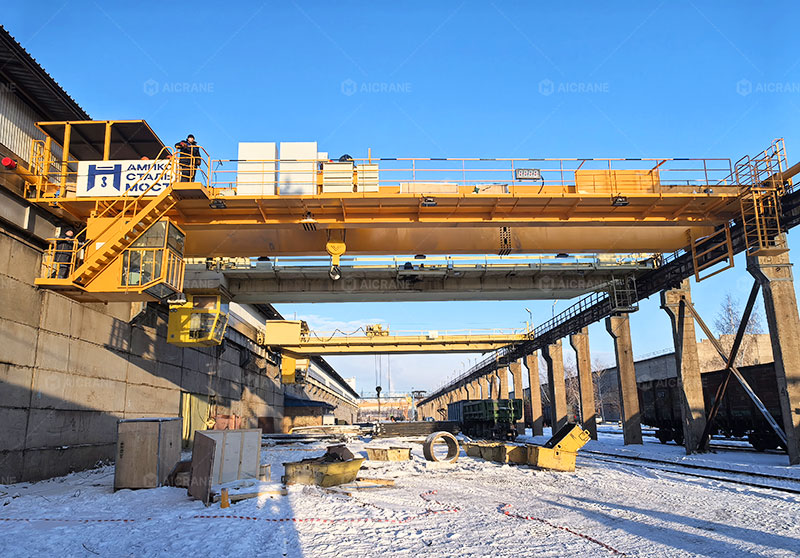
Understanding Duty Cycle in Overhead Cranes
In crane engineering, the duty cycle refers to the intensity of crane operations over time. It takes into account several operational factors, including:
- Number of lifting cycles per hour
- Average load handled compared to rated capacity
- Total operating hours per day
- Distribution of loads during operation
These factors are used to classify cranes into duty classes, which define the level of mechanical stress the crane components are designed to withstand.
Several international standards classify crane duty cycles, including:
- CMAA (Crane Manufacturers Association of America): Classes A–F
- FEM (European Materials Handling Federation): Groups 1Am–4m
- ISO standards: M1–M8
For example: Light duty overhead cranes are typically used in maintenance workshops or warehouses where lifting is infrequent. Medium duty cranes are common in fabrication plants and assembly workshops. Heavy duty cranes are designed for demanding environments such as steel mills, power plants, and shipyards where cranes operate continuously.
Selecting the appropriate duty class ensures the crane’s structure, motors, hoist mechanisms, and control systems are engineered to match operational demands.
Ensuring Structural Reliability and Safety
One of the primary reasons duty cycle is critical in crane selection is structural reliability. Double girder overhead cranes operate under repeated loading conditions, which introduce fatigue stresses in the crane girders, trolley frames, and other structural components.
If the crane’s duty class is too low for the intended application, the structure may experience:
- Accelerated fatigue cracking
- Structural deformation
- Increased risk of mechanical failure
High-duty operations such as continuous lifting in steel mills or precast concrete plants place significant stress on crane girders. In these environments, selecting a crane with an appropriate duty cycle classification ensures the steel structure is designed with sufficient strength, fatigue resistance, and safety margins.
Proper duty cycle selection therefore directly contributes to long-term operational safety and reliability.
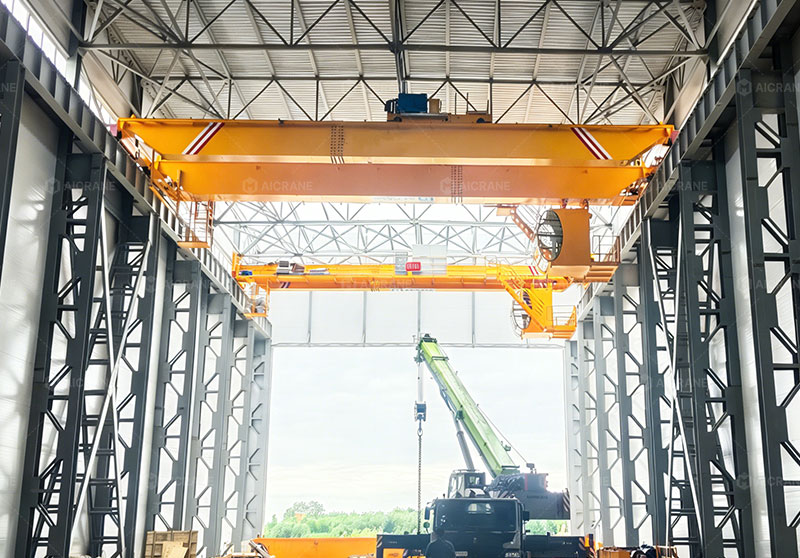
Matching Mechanical Components to Operational Demands
The duty cycle also determines how the crane’s mechanical and electrical components are designed and selected. Key systems affected include:
Hoisting Mechanisms
The hoist is the most heavily loaded part of an overhead crane. In high-duty environments, the hoisting system must withstand frequent starts, stops, and heavy loads.
A crane designed for intensive duty cycles will typically include:
- High-performance motors with higher insulation classes
- Heavy-duty gearboxes
- Enhanced braking systems
- Durable wire ropes or chains
If a crane with insufficient duty rating is used in a demanding environment, hoist components may wear rapidly, resulting in frequent breakdowns and costly downtime.
Travel Drives and Gear Systems
Duty cycle also influences the design of bridge and trolley travel mechanisms. Heavy duty overhead cranes require motors and gearboxes capable of handling continuous operation and frequent directional changes.
Inadequate duty cycle selection can lead to overheating, premature gear wear, or motor failure.
Preventing Excessive Maintenance and Downtime
Industrial facilities rely on cranes for continuous material handling operations. When a crane is underspecified for the required duty cycle, maintenance requirements can increase dramatically.
Common issues caused by insufficient duty ratings include:
- Rapid brake wear
- Overheating motors
- Premature bearing failure
- Gearbox damage
- Increased structural inspections
These problems lead to unexpected downtime, which can disrupt production schedules and increase operating costs.
By selecting a crane designed for the correct duty cycle, companies can significantly reduce maintenance frequency and improve overall equipment availability.
Supporting Productivity and Operational Efficiency
A properly selected duty cycle ensures that the crane can operate efficiently under real working conditions. In many industrial facilities, cranes perform repetitive lifting tasks throughout the day.
For example:
- Manufacturing plants may require cranes to lift components dozens of times per hour.
- Steel processing facilities often operate cranes continuously across multiple shifts.
- Precast concrete plants rely on cranes to move heavy molds and finished components throughout production cycles.
In these scenarios, an overhead crane for sale with an appropriate duty classification maintains consistent performance without excessive wear. This supports stable production workflows and higher operational efficiency.
Selecting an inadequate duty cycle can lead to reduced lifting speeds, overheating, and forced downtime, all of which negatively impact productivity.
Optimizing Long-Term Investment Costs
Although higher duty cycle cranes generally have higher initial costs, they often provide better long-term value. Choosing the correct duty class ensures that the crane’s design matches operational demands throughout its service life.
If a crane with a lower duty rating is purchased to reduce upfront costs, the result may include:
- Higher maintenance expenses
- Frequent component replacements
- Reduced service life
- Operational disruptions
In contrast, selecting the proper duty cycle allows the crane to operate reliably for many years with predictable maintenance requirements. This approach helps businesses achieve lower lifecycle costs and improved return on investment.
Aligning Crane Selection with Application Requirements
Different industries have unique lifting patterns and operational demands. Understanding the duty cycle requirements of a specific application is therefore essential during crane selection.
Typical examples include:
Light-duty applications
- Maintenance workshops
- Equipment repair facilities
- Occasional warehouse lifting
Medium-duty applications
- Fabrication plants
- General manufacturing workshops
- Assembly operations
Heavy-duty applications
- Steel mills
- Power plant construction
- Shipyards
- Precast concrete production plants
By evaluating factors such as lifting frequency, average load weight, and operating hours, engineers can determine the appropriate duty classification for a double girder overhead crane.
Avoiding Common Crane Selection Mistakes
One of the most common mistakes in crane procurement is assuming that capacity alone determines crane suitability. While lifting capacity defines the maximum load a crane can handle, it does not reflect how often the crane will operate.
Two cranes with the same 50-ton capacity, for example, may have completely different duty ratings depending on their intended use. A crane designed for occasional maintenance lifting will be engineered very differently from one used in continuous industrial production.
Ignoring duty cycle considerations during selection can result in a crane that technically meets capacity requirements but cannot sustain real operational demands.
Conclusion
The duty cycle is one of the most important factors in double girder overhead crane selection. It defines how intensively the crane will operate and determines the design requirements for structural components, hoisting systems, motors, and drive mechanisms.
Selecting the correct duty cycle ensures:
- Structural durability and fatigue resistance
- Reliable mechanical performance
- Reduced maintenance and downtime
- Higher productivity in industrial operations
- Lower lifecycle costs
For any project involving overhead cranes, evaluating lifting frequency, load distribution, and operating hours is essential. By carefully matching the crane’s duty class with actual operational requirements, businesses can ensure safe, efficient, and long-lasting crane performance in their facilities.