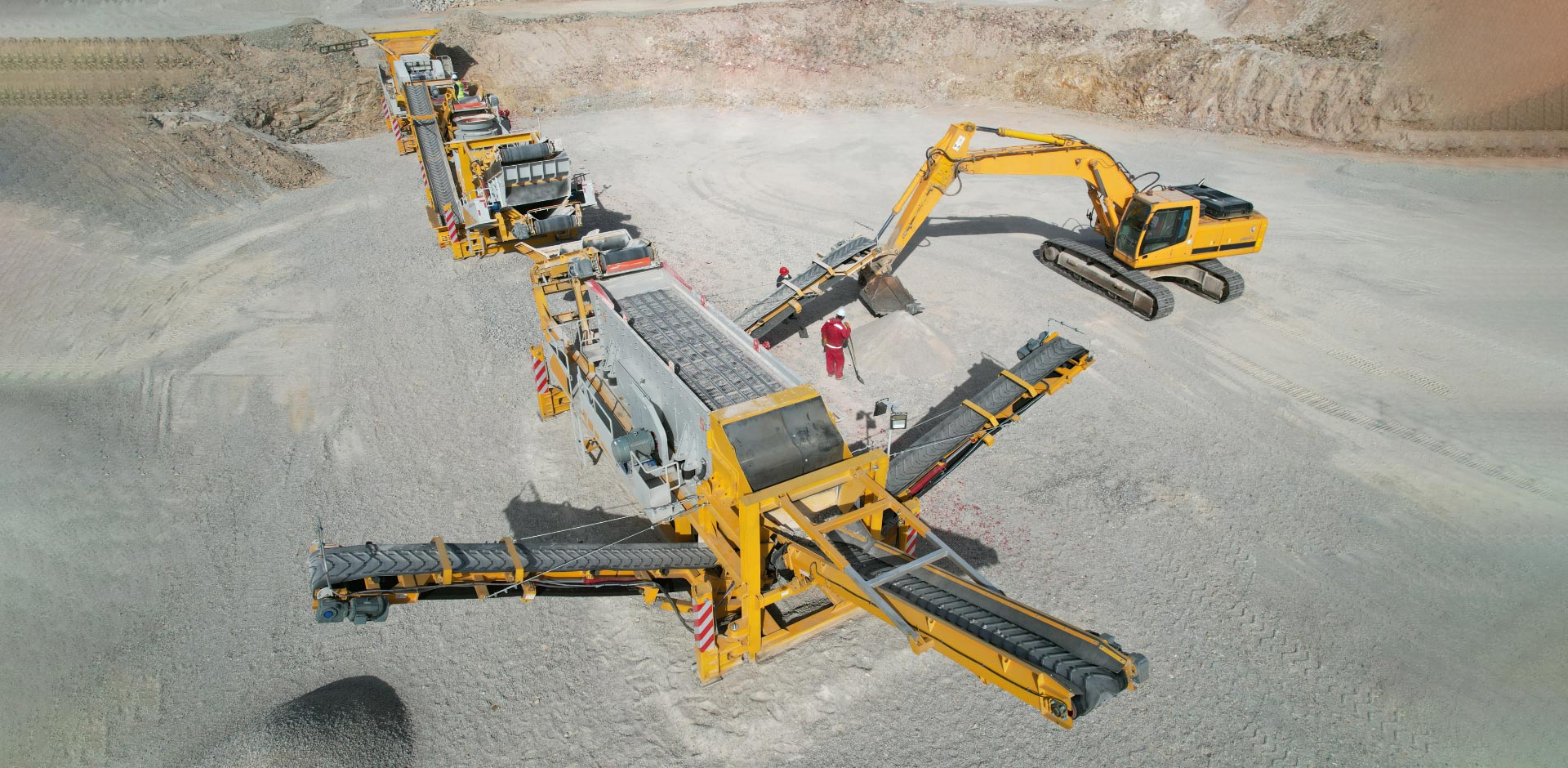
Limestone processing is often approached through the lens of hardness. A harder rock is generally expected to demand greater crushing force, higher energy input, and more robust wear protection. That logic is valid, but it does not tell the whole story. In many limestone crushing and grinding operations, moisture can become a more immediate operational constraint than hardness itself. A moderately hard limestone with excessive surface moisture may behave more unpredictably than a harder but dry feed, particularly once fine particles begin accumulating inside limestone crushers, screens, conveyors, or grinding circuits.
Moisture changes how limestone flows, separates, breaks, and behaves after size reduction. It can promote adhesion, clogging, material buildup, and inefficient screening, while also altering the apparent behavior of fines. As particle size decreases, the influence of moisture can become increasingly pronounced because the material develops more surface area relative to its mass. For this reason, evaluating limestone only by compressive strength or hardness can lead to an incomplete equipment and process assessment.
Why Limestone Moisture Changes the Crushing and Grinding Behavior
Hardness Determines Breakage, While Moisture Can Determine Material Handling
Hardness primarily describes how resistant limestone is to mechanical deformation and breakage. During crushing, this property affects the force required to fracture larger pieces. During grinding, it influences energy consumption and wear.
Moisture behaves differently. Rather than simply resisting breakage, water changes the interaction between particles and equipment surfaces.
Dry limestone tends to flow relatively freely through hoppers, crushers, screens, and transfer points. When moisture increases, fine particles can become cohesive. They may adhere to larger particles, form compacted masses, or stick to metal surfaces.
The result is a material that may still be relatively easy to fracture but considerably more difficult to process continuously.
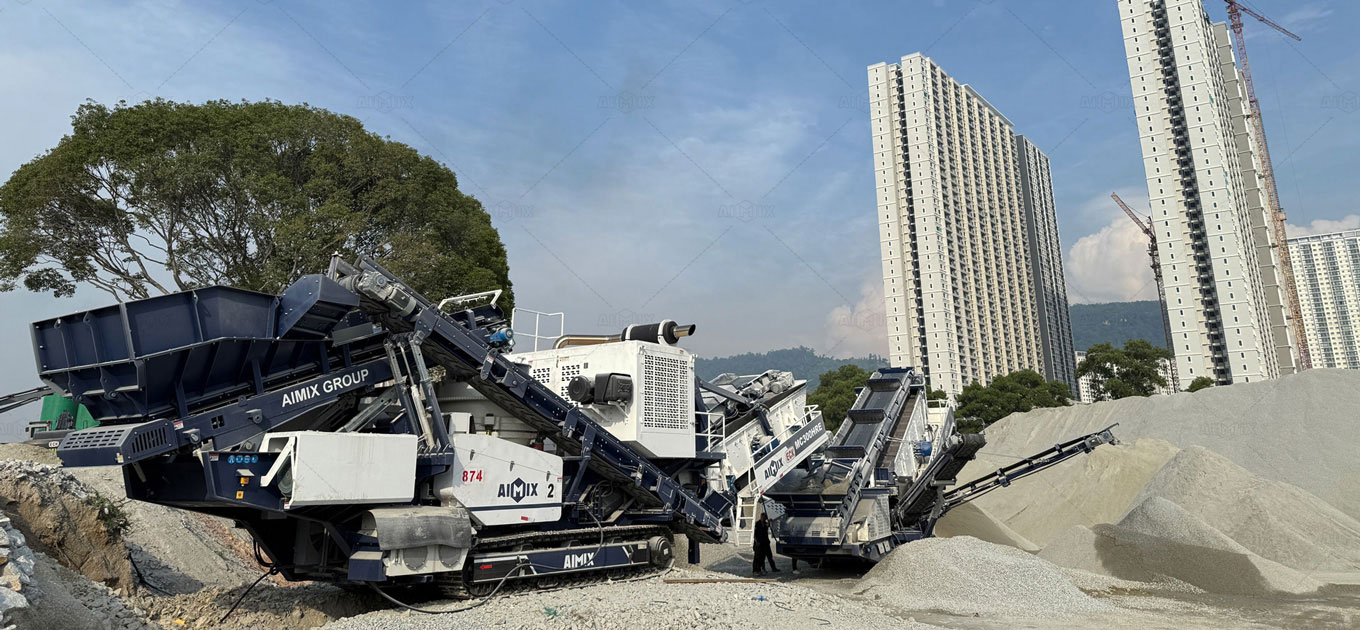
Fine Particles Make Moisture More Significant
The influence of moisture becomes more pronounced as limestone becomes finer. Crushing creates additional surface area, and grinding creates substantially more. The newly exposed surfaces provide more opportunity for water to form thin films between particles.
This can increase interparticle cohesion.
A small amount of moisture that appears insignificant in coarse feed may become operationally important after secondary crushing or grinding. Fine limestone can begin behaving less like a freely flowing granular material and more like a cohesive powder.
That transition is critical because many processing problems originate not from the difficulty of breaking the rock, but from what happens to the material after it has been broken.
Where Moisture Creates Problems in Limestone Crushing and Grinding
Crushers Can Experience Material Buildup and Reduced Throughput
A crusher is designed to receive, compress, impact, or shear material and discharge the resulting fragments. Excessive moisture can interfere with this intended flow pattern.
Wet fines may accumulate around the crushing chamber or discharge area, particularly when the limestone contains clay, silt, or other fine contaminants. Instead of immediately leaving the machine, material can adhere to surfaces and gradually form deposits.
Choking Is Not Always a Hardness Problem
When an aggregate crusher begins losing throughput, operators may initially suspect excessively hard feed or inadequate crushing capacity. Yet moisture-induced buildup can produce similar symptoms.
The machine may have sufficient mechanical power to break the limestone, but the material cannot move through the chamber efficiently. In this case, increasing crushing force does little to solve the underlying problem.
The bottleneck is material flow rather than breakage resistance.
Screening Efficiency Can Decline as Moisture Rises
Screening is particularly sensitive to wet fines. Dry particles can pass through screen openings according to their size and shape. Moist particles, however, may adhere to one another and form agglomerates larger than their individual particles.
This phenomenon can reduce the effective separation of the screen.
Fine limestone may also coat the screen surface, gradually reducing the available open area. Once this occurs, undersize material can remain in the oversize stream, lowering classification accuracy and potentially sending material back through the crushing circuit unnecessarily.
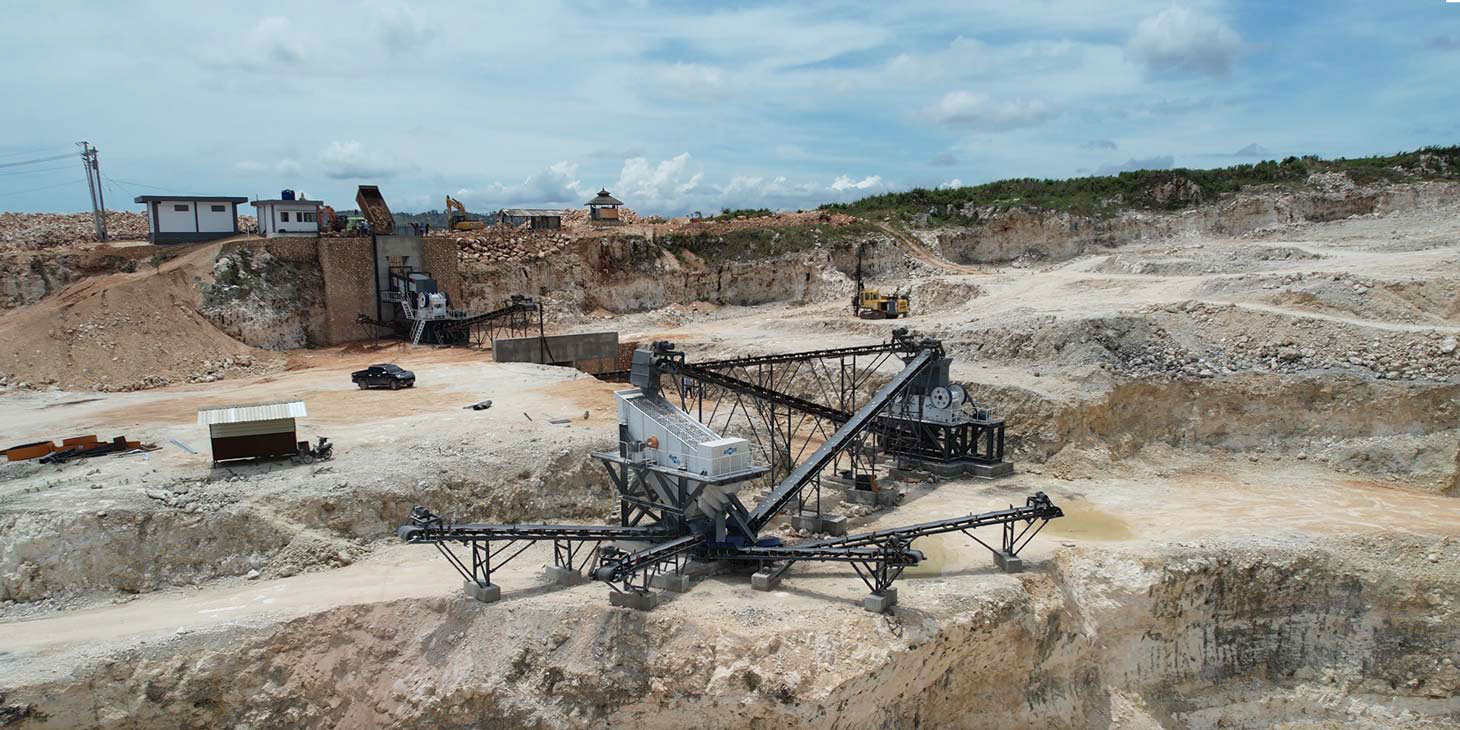
Grinding Circuits Become More Sensitive to Feed Moisture
Grinding introduces an even more delicate relationship between particle size and moisture. As limestone becomes finer, surface area increases dramatically. If the feed contains significant water, the material may become sticky and difficult to discharge.
In dry grinding systems, excessive moisture can therefore become a limiting factor even when the limestone itself is not especially hard.
The ball mill may consume energy without achieving the expected throughput because material transport and classification have deteriorated.
Moisture Can Alter the Balance Between Grinding and Classification
A grinding circuit is not simply a device for making particles smaller. It is a coordinated system involving grinding, material transport, air movement or classification, and product discharge.
When moisture causes fine particles to agglomerate, classification becomes less effective. Particles that should leave the circuit may behave as larger clusters and remain in the grinding zone.
The consequence can be increased circulating load and reduced overall efficiency.
How to Evaluate Moisture Before Selecting Crushing and Grinding Equipment
Measure More Than the Average Moisture Content
A single moisture percentage does not always describe the real processing challenge. Limestone can contain different moisture levels across a stockpile, quarry face, or feed stream.
Surface moisture is particularly important for handling behavior. A material that has absorbed water after rainfall may behave differently from limestone containing moisture uniformly throughout its internal structure.
Therefore, testing should consider moisture variation, particle-size distribution, clay content, and the point in the process where moisture becomes problematic.
Consider Moisture Together With Hardness and Feed Size
Hardness and moisture should not be treated as competing variables where one simply replaces the other. They influence different parts of the process.
Hardness affects the mechanical work required to fracture limestone and contributes to wear. Moisture affects flowability, screening, adhesion, and the behavior of fines.
A practical equipment assessment should therefore examine the combination.
For example, hard and dry limestone may require stronger crushing components and higher wear resistance, while softer but wet limestone may require greater attention to feed handling, screening, and material discharge. A limestone with moderate hardness and high moisture can create a different engineering challenge altogether.
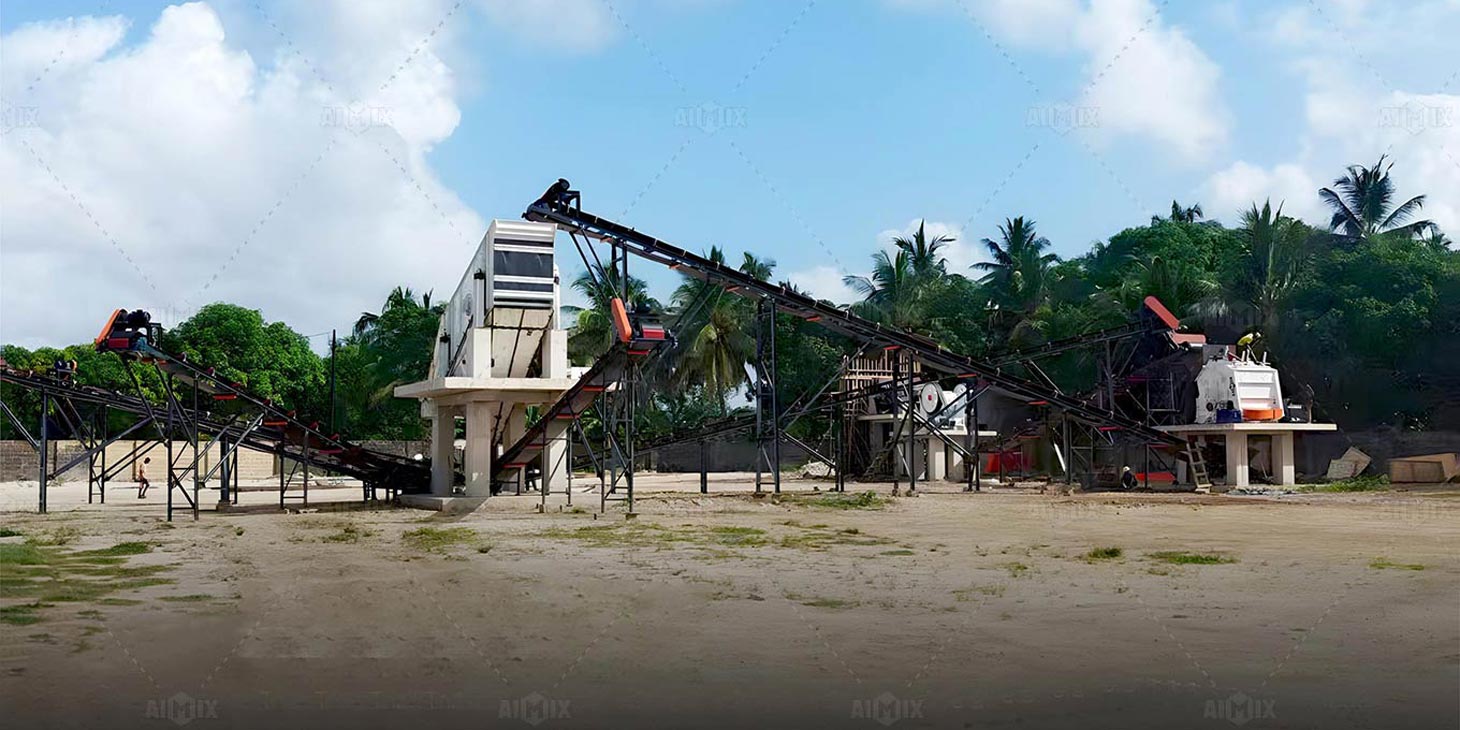
Use Process Design to Manage Moisture Rather Than Relying Only on Equipment Power
Increasing motor power is rarely a universal solution to moisture-related problems. If material is sticking to a chute, blinding a screen, or accumulating inside a crusher, additional power does not necessarily restore efficient material flow.
Instead, the process may require upstream or downstream adjustments.
Pre-Screening and Feed Preparation
Removing excessive fines before primary or secondary crushing can reduce the amount of moisture-sensitive material entering the crushing chamber. Where conditions permit, feed preparation can therefore prevent wet fines from becoming a bottleneck.
Drying or Moisture Control Before Grinding
For applications requiring fine limestone powder, moisture control becomes even more important. Drying may be necessary when feed moisture exceeds the operating tolerance of the grinding system.
This is particularly relevant to dry grinding, where moisture can compromise powder flow, classification efficiency, and final product consistency.
The Better Way to Think About Limestone Crushing and Grinding
Limestone hardness remains an important parameter, but it should not dominate the entire equipment-selection discussion. A processing plant is not dealing with hardness in isolation. It is dealing with a material whose physical behavior changes as moisture, particle size, fines content, and handling conditions interact.
Moisture can become the hidden variable that determines whether a theoretically suitable stone crushing plant or grinding system performs efficiently in practice.
The key question is therefore not simply, “How hard is the limestone?” It is also, “How does this limestone behave at its actual moisture level as particle size decreases?”
That distinction matters. Hardness tells engineers how difficult limestone may be to fracture. Moisture can reveal how difficult it will be to move, screen, classify, discharge, and continuously process after fracture. For limestone crushing and grinding, understanding both characteristics—and recognizing where moisture becomes dominant—is often the difference between a process that merely works on paper and one that performs reliably in the field.