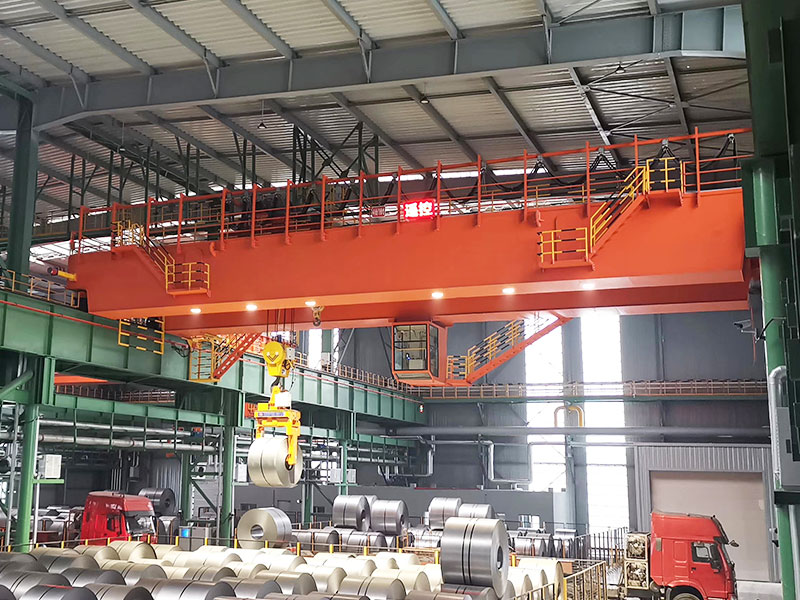
A 40-ton overhead crane operating in heavy industrial environments such as steel mills, foundries, power plants, and large fabrication workshops is often required to work under 24/7 continuous duty cycles. Unlike intermittent lifting applications, these cranes may run almost non-stop, handling repeated lifting, lowering, traveling, and trolley movements throughout the day and night.
In such demanding conditions, one of the most critical engineering challenges is heat management. Overheating in motors, gearboxes, brakes, electrical systems, and even structural components can significantly reduce crane lifespan, increase maintenance costs, and create serious safety risks.
Therefore, designing a 40 ton overhead crane for continuous heavy-duty operation requires a comprehensive approach that integrates thermal engineering, mechanical optimization, electrical system design, and intelligent control strategies.
This article explains the key engineering principles behind designing 40-ton overhead cranes that can operate continuously without overheating.
1. Understanding Heat Generation in Continuous Crane Operation
To solve overheating problems, it is essential to first understand where heat comes from in a 40-ton overhead crane.
Main Sources of Heat
During continuous operation, heat is generated in:
- Hoist motors
- Travel and trolley motors
- Gearboxes
- Braking systems
- Electrical control panels
- Wire rope friction systems
Each lifting cycle converts electrical energy into mechanical work, but inefficiencies inevitably produce heat.
Why 24/7 Operation Increases Thermal Stress
In intermittent duty cranes, components have time to cool down between cycles. However, in continuous operation:
- Heat accumulates faster than it dissipates
- Thermal equilibrium is never fully achieved
- Components operate at elevated baseline temperatures
Without proper design, this leads to:
- Motor insulation degradation
- Lubricant breakdown
- Reduced gearbox efficiency
- Brake fade and instability
2. Motor Design for Continuous High-Duty Cycles
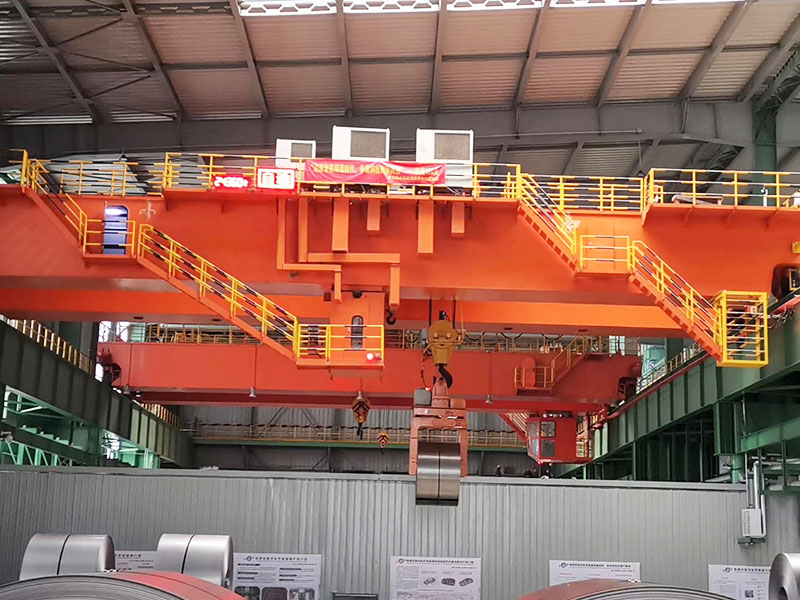
The hoist and travel motors are the most heat-sensitive components in a 40-ton double girder overhead crane.
High Duty Class Motors (FEM / ISO Class)
For continuous operation, motors must be designed for:
- High duty class ratings (M6, M7, or equivalent)
- High thermal endurance insulation (Class F or H insulation systems)
- High starting frequency capability
These motors are built to handle:
- Frequent starts and stops
- High torque loads
- Continuous operation without overheating failure
Improved Motor Cooling Systems
To prevent overheating, advanced cranes use:
- IC411 self-cooling systems (standard fan cooling)
- IC416 forced ventilation systems (external cooling fans)
- High-efficiency heat dissipation fins
Forced ventilation is especially important in 24/7 operations because it ensures stable temperature control even under continuous load.
3. Gearbox Thermal Optimization Design
Gearboxes are another major heat source in heavy duty overhead cranes.
Causes of Gearbox Heating
Heat is generated due to:
- Gear meshing friction
- Lubricant shear resistance
- Continuous torque transmission
- Load fluctuations during lifting
High-Efficiency Gear Design
To reduce heat generation, engineers use:
- Precision-ground helical gears
- Optimized gear tooth profiles
- High-strength alloy steel materials
These improvements reduce friction and energy loss.
Advanced Lubrication Systems
Continuous-duty cranes require:
- High-temperature synthetic lubricants
- Anti-foaming and anti-wear additives
- Proper lubrication flow channels
Some systems also include:
- Oil circulation cooling systems
- External oil heat exchangers for extreme duty applications
4. Brake System Heat Control in Continuous Operation
Braking systems are critical safety components but also major heat generators.
Heat Generation in Brakes
During frequent operations:
- Friction braking produces thermal buildup
- Repeated stopping cycles increase brake pad temperature
- Overheating can cause brake fade
Heat-Resistant Brake Materials
To handle continuous duty, industrial overhead cranes use:
- High-performance friction materials
- Heat-resistant brake linings
- Reinforced brake discs or drums
These materials maintain stability even at elevated temperatures.
Electromagnetic Brake Optimization
Modern systems use:
- Low-power electromagnetic brakes
- Rapid heat dissipation designs
- Air-gap optimized brake coils
This reduces both energy consumption and heat generation.
5. Electrical System Thermal Management
Electrical systems must remain stable under continuous operation.
Heat in Control Panels
Sources include:
- Variable frequency drives (VFDs)
- PLC controllers
- Power resistors
- Contactors and relays
Electrical Cabinet Cooling Solutions
To prevent overheating:
- Forced air ventilation systems
- Air conditioning units for control rooms
- Heat sinks and thermal dissipation panels
- Proper cabinet layout for airflow optimization
Cable System Design
Heat can also accumulate in cables if not properly designed:
- Oversized cables reduce resistance heating
- High-temperature insulation materials improve safety
- Organized cable routing improves airflow
6. Structural Design for Heat Stability
Even crane structures are affected by long-term thermal exposure.
Thermal Expansion Considerations
Steel structures expand under heat, so engineers design:
- Expansion joints in long girders
- Flexible connection points
- Stress-relief structural layouts
Fatigue and Heat Interaction
Heat accelerates fatigue damage by:
- Reducing material strength at elevated temperatures
- Increasing micro-crack propagation speed
Therefore, structural design must ensure:
- Low stress concentration
- Smooth load transfer paths
- Balanced structural rigidity
7. Advanced Cooling Strategies for 24/7 Operation
To ensure uninterrupted operation, multiple cooling strategies are combined.
Passive Cooling Design
Includes:
- Heat-dissipating structural surfaces
- Natural ventilation pathways
- Thermal conduction optimization
Active Cooling Systems
For high-intensity cranes:
- Forced air cooling systems
- Oil circulation cooling for gearboxes
- Water-cooled systems in extreme applications
Heat Monitoring Systems
Modern cranes include:
- Temperature sensors in motors and gearboxes
- Real-time thermal monitoring dashboards
- Automatic overload or shutdown protection
This prevents overheating before failure occurs.
8. Hoisting System Thermal Efficiency Design
The hoisting system operates under the highest load and thermal stress.
Wire Rope Heat Control
Heat is generated due to:
- Rope bending friction
- Drum contact friction
- Continuous load cycles
Solutions include:
- Lubricated wire ropes
- High-quality grooved drums
- Optimized rope angle design
Efficient Load Handling
Reducing unnecessary stress helps control heat:
- Smooth acceleration and deceleration
- Avoiding sudden load drops
- Controlled lifting speeds
9. Lubrication Management for Heat Reduction
Lubrication is essential for controlling heat in all mechanical systems.
Heat-Resistant Lubricants
For continuous operation:
- Synthetic oils with high thermal stability
- Greases designed for high-temperature environments
- Low-viscosity lubricants for reduced friction
Lubrication Scheduling Systems
Automated or planned lubrication ensures:
- Consistent friction reduction
- Lower operating temperatures
- Extended component lifespan
10. Operational Strategies to Prevent Overheating
Engineering design alone is not enough—operation matters too.
Load Distribution Control
Operators should:
- Avoid constant maximum load lifting
- Distribute workload evenly across cycles
- Prevent overload conditions
Continuous Operation Management
Even in 24/7 systems:
- Short micro-breaks reduce heat accumulation
- Alternating crane usage can balance thermal load
- Monitoring system alerts help prevent overheating
11. Predictive Maintenance for Thermal Management
Predictive systems are essential for continuous-duty cranes.
Thermal Monitoring Sensors
These track:
- Motor temperature
- Gearbox temperature
- Brake temperature
- Electrical cabinet heat levels
Data-Driven Maintenance
Using collected data:
- Predict overheating risks
- Schedule preventive repairs
- Optimize cooling system performance
This reduces unexpected downtime significantly.
Conclusion
Designing a 40-ton overhead crane for 24/7 continuous heavy-duty operation without overheating requires a multi-layered engineering approach that integrates thermal control, mechanical efficiency, electrical stability, and intelligent monitoring systems.
Key design principles include:
- High-duty class motors with advanced cooling systems
- Low-friction, high-efficiency gearbox design
- Heat-resistant braking systems
- Intelligent electrical cooling and ventilation
- Structural thermal stability considerations
- Effective lubrication and predictive maintenance
When all these systems work together, a 40-ton overhead crane can achieve stable, safe, and continuous operation even under extreme industrial workloads, ensuring maximum productivity with minimal downtime.