The Latin American construction landscape demands high efficiency, adaptability, and cost-effective equipment deployment. For medium and small-scale infrastructure projects, the financial viability of a project hinges on reducing reliance on external ready-mix trucks and manual labor. Investing in a self-loading concrete mixer has emerged as a preferred solution for contractors seeking operational independence. By looking at real-world financial metrics, this article calculates the investment recovery period for these versatile machines within the dynamic Latin American market.
The Economic Mechanics of Self-Loading Concrete Mixers
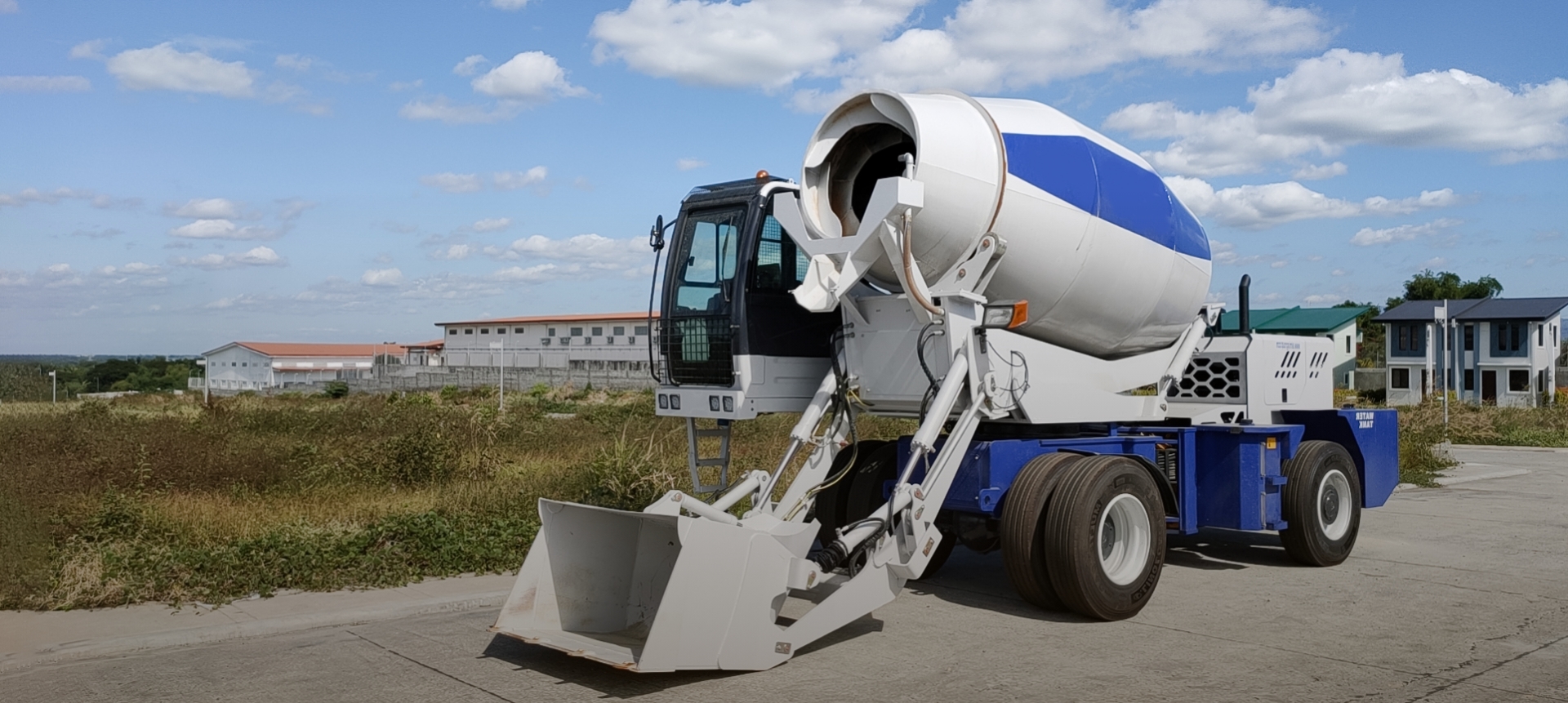
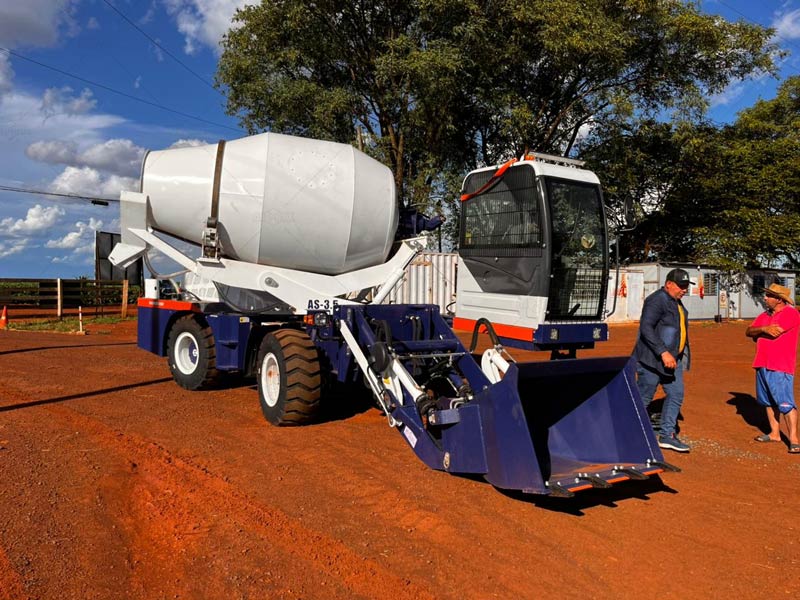
A self-loading concrete mixer(hormigonera autocargable) functions as a mobile concrete batching plant, transit mixer, and wheel loader all integrated into a single heavy-duty chassis. This configuration allows a single machine operator to load, weigh, mix, transport, and discharge high-quality concrete directly on the job site. The consolidation of these operations fundamentally changes the cash flow dynamic of a typical construction project.
Eliminating Ready-Mix Premium and Transport Costs
Relying on commercial ready-mix suppliers involves paying a significant premium that covers industrial overhead, transit risk, and supplier profit margins. Furthermore, in areas with congested urban traffic or challenging rural roads, ready-mix trucks often face transit delays that can cause the concrete to spoil. Producing concrete on-site directly addresses these inefficiencies and slashes the raw material cost per cubic meter.
Drastic Reductions in Manual Labor Expenses
Traditional on-site concrete production requires a distinct team of laborers to shovel aggregates, manage a small static mixer, and wheelbarrow the wet mix to the pouring location. Operating a self-loading concrete mixer reduces the required headcount on-site to just one operator and one helper, minimizing labor liabilities, management overhead, and payroll expenses.
Real-World Financial Baseline and Recovery Calculation
To understand the timeline for recovering this capital expenditure, let us analyze a typical scenario based on recent market data. When a construction firm browses a self-loading concrete mixer for sale, the acquisition cost varies based on drum capacity, engine type, and hydraulic configurations.
For this calculation, we assume a mid-range system with a 3.5 cubic meter output capacity. A high-quality self-loading concrete mixer for sale(autohormigonera en venta) in this category typically requires an initial investment of approximately $45,000 to $55,000, including import duties and regional shipping.
Assumptions for the Financial Model:
- Average Daily Concrete Output: 30 cubic meters (roughly 8 to 9 batches per day)
- Working Days Per Month: 20 days
- Ready-Mix Commercial Price: $110 per cubic meter
- On-Site Production Cost (Raw Materials + Fuel + Operator): $75 per cubic meter
- Net Savings Per Cubic Meter: $35
Monthly Savings and Payback Period:
By producing concrete on-site rather than purchasing ready-mix, the contractor captures a net saving of $35 per cubic meter. With a daily volume of 30 cubic meters, the daily operational savings equal $1,050. Over a standard working month of 20 days, the total savings climb to $21,000.
Subtracting maintenance allocations, routine wear-and-tear parts, and insurance ($2,000 per month), the net financial benefit stands at $19,000 per month. If the initial machine price was $50,000, the investment recovery period is achieved in less than three months of consistent operation. Even if the asset operates at only 50% capacity, the investment is fully recovered within six months.
Regional Case Studies: Peru and Chile
The practical application of this economic model shows minor variations depending on local market factors, labor rates, and geographical conditions across different nations.
High Altitude and Remote Operations in Peru
Contractors utilizing a self-loading concrete mixer Peru offers face unique geographical challenges, particularly when executing projects in the Andean highlands. Transporting commercial concrete from centralized plants in Lima or Arequipa to remote mining roads or mountain communities is logistically impossible.
Firms that deploy a self-loading concrete mixer Peru model can source local aggregates directly, maintaining complete control over their construction schedules. Due to the high transport premiums charged by traditional transit trucks in rugged terrains, the net savings per cubic meter in the Peruvian interior often exceed $40, accelerating the asset recovery timeline significantly.
Strict Urban Regulations and Efficiency in Chile
On the western side of the Andes, purchasing a self-loading concrete mixer Chile(una autohormigonera Chile) certified requires meeting stringent emissions standards and precise engineering specifications. The construction market here deals with high labor costs and rigid environmental regulations within major cities like Santiago and Concepción.
By utilizing a self-loading concrete mixer Chile contractors can bypass the hefty logistical fees associated with setting up traditional concrete batching plants in restricted urban zones. The machine’s integrated electronic weighing system ensures exact water-to-cement ratios, helping projects meet tight structural compliance checks on the first pour, preventing costly re-work and boosting overall project margins.
Key Variables Impacting Long-Term ROI
While the initial payback period is remarkably swift, sustaining a high return on investment over the machine’s full operational lifespan requires proactive operational management.
Fleet Utilization Rates
The financial model depends heavily on consistent machine utilization. If the equipment sits idle in a yard between contracts, the amortization period stretches out. Successful contractors often cross-utilize their machines across multiple small neighborhood paving jobs, foundation pours, and retaining wall projects to keep production numbers high.
Adherence to Preventative Maintenance
Because these units load their own raw aggregates, the internal hydraulic pumps, loading shovels, and drum rollers handle significant daily stress. Establishing a rigorous daily cleaning schedule to prevent concrete buildup inside the drum and performing regular oil and filter changes prevents unexpected breakdowns, preserving the asset’s high resale value in the secondary market.
Strategic Summary
Acquiring a self-loading concrete mixer represents a highly effective capital investment for Latin American construction companies. Whether navigating the high-altitude infrastructure demands with a self-loading concrete mixer Peru(autohormigonera Perú) configuration, or optimizing labor efficiency via a self-loading concrete mixer Chile application, the financial numbers remain consistently strong. By replacing commercial concrete premiums with automated on-site production, contractors can reliably recover their equipment investment within the first few months of deployment, creating a sustainable foundation for long-term business growth.