Regional budget allocations for large-scale rural roads construction traditionally assumed centralized fixed-site asphalt production facilities as cost-optimal solutions, yet comprehensive financial analysis reveals that distributed small asphalt plants eliminate expensive long-distance material hauling that compounds total project expenditure beyond initial equipment investment. When planning infrastructure spending for dispersed rural road networks spanning hundreds of kilometers, contractors must understand how much does it cost to build an asphalt plant from scratch with permanent concrete foundation systems, then compare that substantial capital commitment against deployment of highly agile small asphalt plants positioned strategically within regional corridors. Macroad – road construction machinery manufacturer specializing in Southeast Asian infrastructure projects – demonstrates that small asphalt plants reduce transportation logistics costs by 40 to 55 percent compared to centralized fixed-facility models, a financial advantage that justifies equipment acquisition premium and fundamentally transforms rural roads construction economics across geographically dispersed contract networks.
Fixed Facilities Demand Substantial Foundation Capital
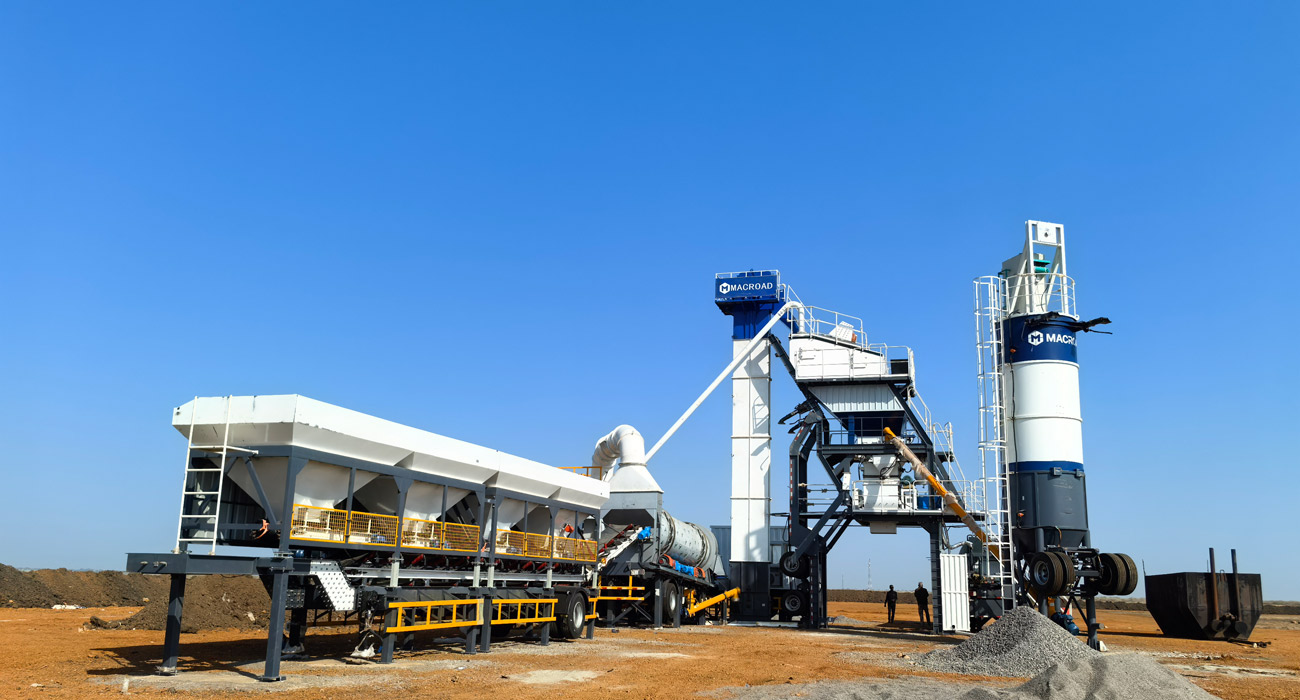
How much does it cost to build an asphalt plant from scratch encompasses far more than equipment acquisition when comprehensive site infrastructure requirements are calculated. A permanent facility supporting rural roads construction across a regional corridor requires reinforced concrete foundation systems consuming 450 to 700 cubic meters of concrete, structural site preparation including excavation and soil compaction, electrical distribution infrastructure extending 3 to 5 kilometers from municipal power sources, and water supply systems providing 80 to 120 cubic meters daily for production operations.
These civil engineering components aggregate to $280,000 to $420,000 before equipment installation — expenses that effectively double the baseline inquiry of how much does it cost to build an asphalt plant when total site commissioning is comprehensively evaluated. Additionally, environmental permitting for fixed facilities in rural regions triggers regulatory compliance obligations including stormwater management systems, dust suppression infrastructure, and ongoing environmental monitoring programs consuming $25,000 to $40,000 annually across facility operational lifecycle.
Specifically, site accessibility for rural roads construction projects frequently requires road construction and utility easement acquisition that adds $45,000 to $75,000 to infrastructure costs. Fixed-facility investment becomes economically viable only when rural roads construction contracts guarantee minimum 4 to 6 year operational duration with projected annual material volumes exceeding 40,000 tons. Conversely, regional road rehabilitation programs spanning shorter timelines with uncertain project sequencing face substantial financial risk if capital commitment anchors equipment to single geographic locations where contract termination leaves infrastructure investments abandoned.
Small Asphalt Plants Enable Strategic Deployment
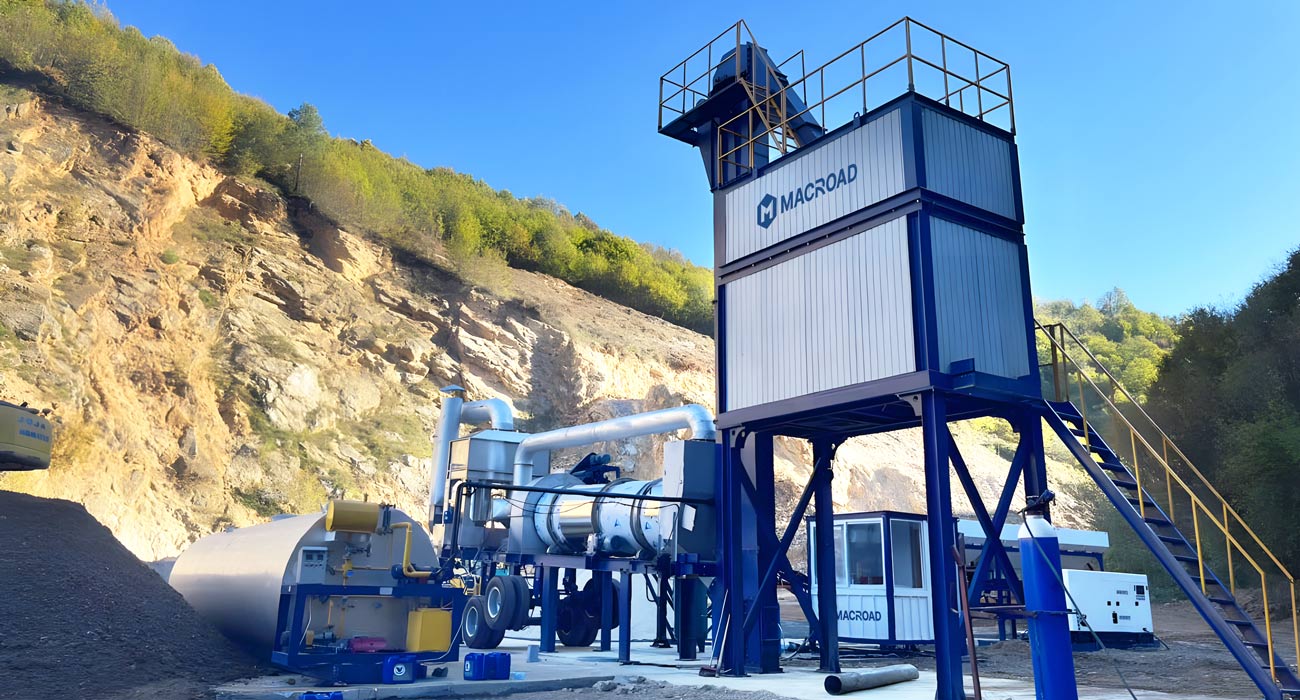
Small asphalt plants offer procurement flexibility that fixed facilities cannot match, eliminating expensive material hauling by positioning equipment within regional road corridors where construction activities concentrate. A 100 to 150 ton-per-hour small asphalt plant requires minimal site preparation — concrete pads consuming 150 to 200 cubic meters concrete — and achieves operational deployment within 3 to 4 weeks compared to 12 to 16 weeks for fixed-facility commissioning.
In light of rural roads construction logistics, small asphalt plants reduce material transportation distance from 80 to 150 kilometers to 15 to 30 kilometers, capturing transportation cost savings exceeding $12,000 to $18,000 monthly on typical regional projects. Macroad – road construction machinery manufacturer – has documented that distributed small asphalt plants across rural networks reduce total material delivery costs by 42 to 58 percent compared to centralized facility models, a financial advantage that compounds across multi-year rural roads construction programs.
From a deployment perspective, small asphalt plants accommodate sequential project site activation across geographically dispersed rural road networks, enabling equipment redeployment as construction fronts advance through regional corridors. Equipment relocation between rural sites occurs within 2 to 3 weeks compared to 8 to 12 week timelines for fixed-facility dismantling and reconstruction.
Transportation Logistics Drive Total Cost Comparison
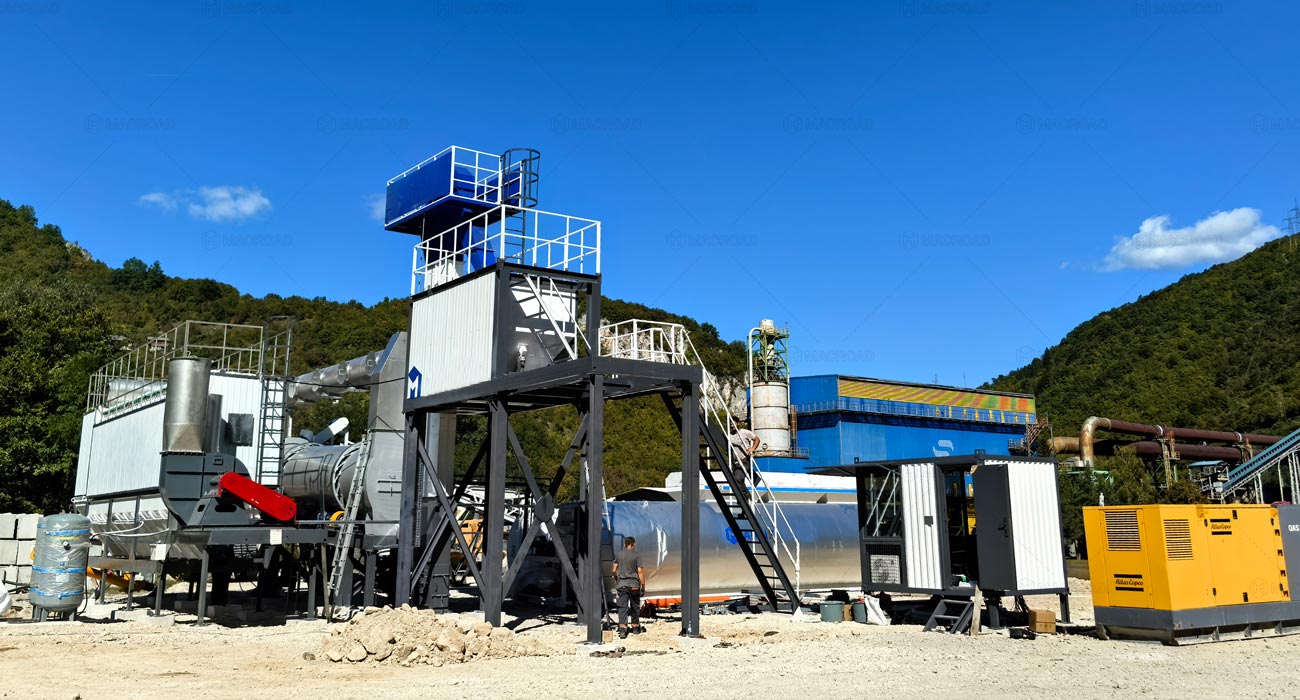
Material hauling expense dominates rural roads construction budgets when centralized fixed-facility production requires 80 to 150 kilometer truck transportation to dispersed project sites. A typical rural road project consuming 3,000 tons monthly asphalt material incurs transportation costs exceeding $18,000 to $28,000 monthly if sourced from distant centralized facilities — expenditure that accumulates to $216,000 to $336,000 annually across extended rural roads construction contracts.
Conversely, small asphalt plants positioned within 20 to 40 kilometer service radius reduce equivalent transportation cost to $5,000 to $8,000 monthly, creating annual logistics savings of $120,000 to $240,000 that justify small asphalt plants equipment acquisition premium. Additionally, reduced transportation distance improves material temperature maintenance — material remains above minimum placement temperature without supplemental heating that centralized facilities require, improving asphalt quality and reducing binder separation that distant hauling induces.
Specifically, rural roads construction projects operating across rugged terrain and secondary road networks often lack adequate trucking infrastructure for efficient material transport from distant facilities, creating de facto requirement for distributed production capacity. Macroad equipment deployments across Southeast Asian rural networks consistently demonstrate that total logistics cost reduction through small asphalt plants deployment exceeds equipment acquisition premium by factors of 1.5 to 2.2 across typical contract durations.
Conclusion
Regional budget allocation decisions for large-scale rural roads construction must evaluate comprehensive cost comparison between fixed-facility capital requirements and distributed small asphalt plants operational advantages. How much does it cost to build an asphalt plant from scratch, when calculated to include site infrastructure, permitting, and civil engineering expenses, frequently exceeds the acquisition cost of strategically deployed small asphalt plants while delivering inferior transportation logistics. Contractors managing rural roads construction across geographically dispersed networks consistently achieve superior financial outcomes through small asphalt plants positioning that eliminates expensive long-distance material hauling, reduces environmental compliance burden, and enables rapid equipment redeployment across sequential project sites.